

When you pop the cap to this kombucha, a little speaker inside begins blaring Shakira. You take one sip and involuntarily start dancing in the kitchen. Seriously, try it.
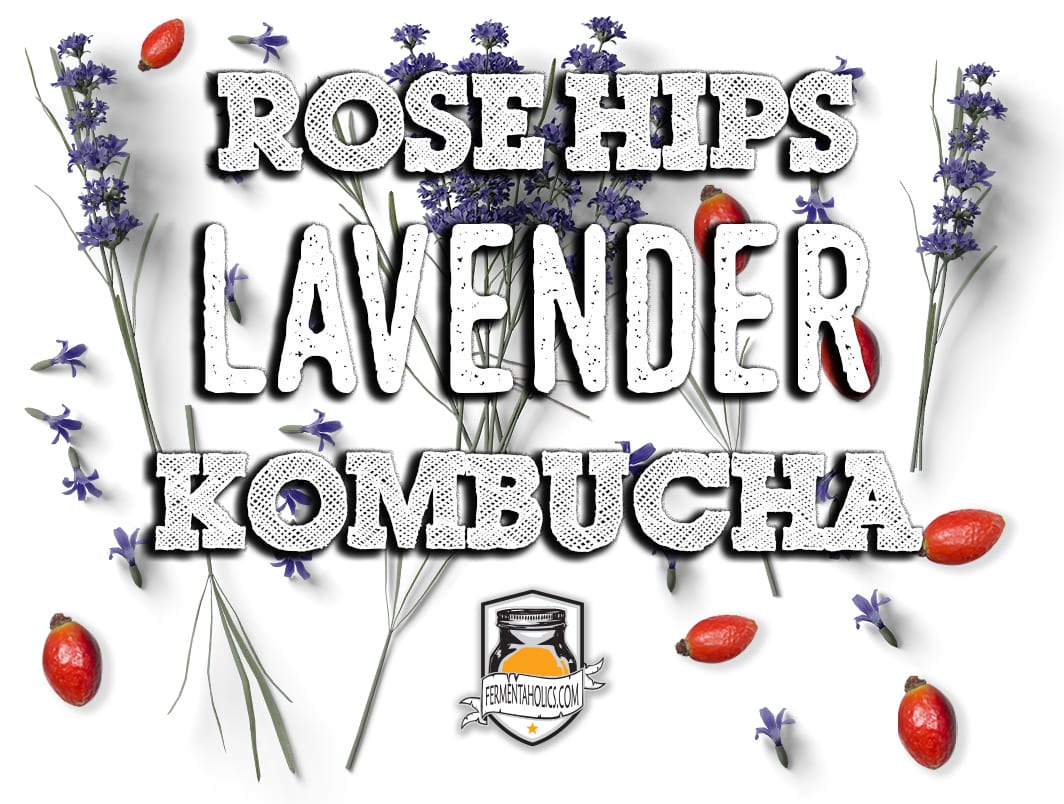
Rosehips don’t lie, and they never disappoint. Naturally astringent, they are a beautiful, tart, refreshing addition to any cup of tea, and this includes kombucha tea.
The rosehips are the fruit of the rose plant. They bear the seeds and can be eaten raw but are more commonly found dried and used for teas, jams, and rosehip soup.
The flavor that rose hips bring is beautifully subtle. It’s a delicate combo of fruity and earthy that tastes undoubtedly luxurious. Rose hips contain a high concentration of vitamin C, so they pull their weight as part of team health, too! Vitamin C helps you absorb iron from other foods that you eat, so adding this kombucha to a green smoothie with spinach would be a great way to capitalize on nutrient intake. Drinking it by itself is glorious, too. This time, I added some dried lavender to go along with the rose hips to emphasize the soft floral characteristics. If you wanted something a little stronger, you could add dried hibiscus or orange peels, honey, or lemon juice.
I encourage you to play around and see what works for you and what doesn’t! I know I love the combo of rose hips and lavender. Give it a try!
It’s important to note that making homemade kombucha is almost always a two-step fermentation process. Brewing kombucha is only a one-step process for those who prefer an unflavored flat kombucha. Otherwise, the steps consist of a primary fermentation and a secondary fermentation.
The primary fermentation is the first step of the kombucha brewing process. This is where your SCOBY transforms regular sweet tea into the tart and slightly sweet kombucha we love. At the end of this stage, you will have finished kombucha, but it will be flat and unflavored. Have you skipped this step? Then check out our guide on making kombucha at home or our guide on making jun kombucha at home. Traditional kombucha is going to yield a bolder brew, while jun kombucha is milder and a bit more tart.
The secondary fermentation is the step where you bottle, carbonate, and flavor your kombucha by the addition of sugar and flavors. This step is essentially adding a bit of sugar/flavor to each airtight bottle and letting it ferment a little longer, allowing the yeast to carbonate the beverage in an airtight environment naturally. How exactly does this happen? See our post on kombucha secondary fermentation here.
💡Since this recipe is for the secondary fermentation, to make this recipe, you’ll need to have kombucha that has finished the primary fermentation and is ready to bottle.
This recipe makes one 16-fluid-ounce bottle. A 1-gallon batch of kombucha will make seven 16-ounce bottles, so for one gallon, you will need to multiply the ingredients by 7. Before beginning this recipe, you will need to:
16
fl oz Bottles10
minutes2 - 10
daysThis rose hips lavender kombucha recipe is for one 16 fluid ounce bottle. For a gallon batch, make seven bottles. To scale this recipe to a gallon batch, multiply the ingredients by seven or toggle the serving size up to seven above. Before bottling your kombucha, remove the SCOBY pellicle along with 12-16 ounces of kombucha starter tea from your brew, and reserve for your next batch.
16 oz Kombucha from a completed primary fermentation.
1 TBSP Dried Rose Hips
1 TBSP Dried Lavender
16 oz Swing Top Bottles