Primary fermentation, second fermentation, and what actually controls your timeline.
One of the most common questions we get is: how long does kombucha actually take to brew? The simple answer with slight rounding is 10 to 30 days total, split across two stages. The first ferment (F1) or primary fermentation runs 7 to 21 days. The second ferment (F2) takes 2 to 10 days. But those ranges are wide on purpose, and understanding why will save you a lot of frustration. If you haven’t made your first batch yet, start with How to Make Kombucha first and come back here once you’re ready to brew.

The primary fermentation or simply F1 is where your SCOBY and starter tea go to work fermenting the sweet tea into kombucha. The yeast consume the sugar and produce alcohol, and the bacteria then convert the alcohol into organic acids. As the acids increase, the pH value drops and creates that signature tart flavor. F1 typically takes 7 to 21 days, depending on two things: temperature and your personal taste preference.
Here’s a good way to think about it: F1 is like cooking a steak. The temperature of the grill controls how fast it goes from raw to well done; but when you pull it off is entirely up to you. If you like it medium-rare, you pull it earlier. If you want it well done, it stays on longer. Your kombucha works the same way. Temperature is the grill; it controls the speed at which your batch moves from sweet to tart. Your taste preference is what tells you when to pull it.
If you like a sweeter kombucha, you’ll bottle earlier than someone who prefers it more tart and acidic; in that case, you’ll let it ferment longer. Two brewers using the exact same setup at the exact same temperature can end up with completely different kombucha just by bottling at different points. Neither one is wrong; it’s just preference.

1. Temperature. Hands down, temperature is the biggest factor. The ideal range for kombucha fermentation is 75°F to 85°F. Inside that window, your culture is active and fermentation moves at a normal pace. Drop below 75°F and things slow down. Drop below 70°F and things slow down dramatically; we’re talking many, many weeks. Go above 85°F and it speeds up, but it can affect the final flavor balance and things can get a little yeasty. If your batches are consistently taking way longer than expected, a cool brewing environment is almost always the reason. Check out our post on brewing kombucha in cold temperatures if this is a recurring issue.
2. Your taste preference. Temperature gets the fermentation moving, but you decide when to stop it. Start tasting at day 7. Note where the flavor is; sweet, balanced, or tart; and use that to decide whether to bottle now or give it more time. There’s no universal “done.” It’s whatever tastes right to you.
pH doesn’t tell you when your kombucha is finished, but it does two really useful things.
First: use it at the start to confirm your batch is safe to sit out. Before you leave your F1 to ferment on the counter, check the pH. It should be at or below 4.5. That reading tells you the starter tea has acidified the batch enough to create a safe environment. If it’s above 4.5, you need more starter tea until it reaches that point. If additional starter tea is unavailable, you can substitute distilled white vinegar in a pinch, but never use raw or live vinegar, as it will have a microbial population of its own. Pick up a pack of fermentation pH test strips if you don’t have them already; they’re the simplest way to track this.
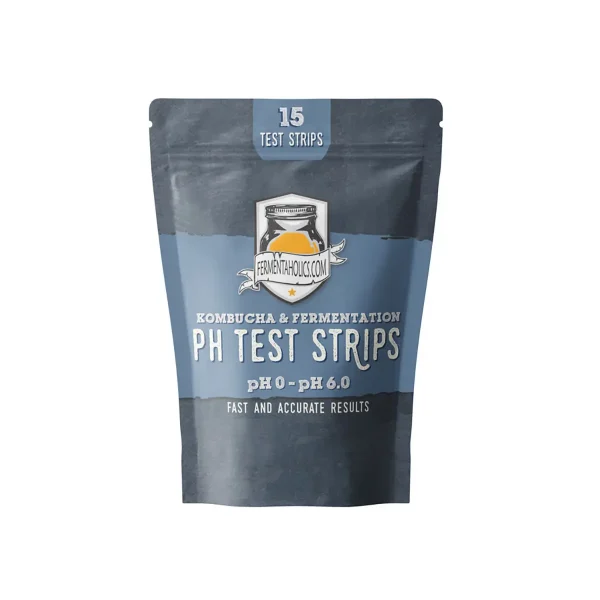
Second: use it on day 7 to confirm fermentation is progressing. Take another reading and compare it to where you started. If the number has dropped, acidity has increased; fermentation is working. If the number hasn’t moved much, something is slowing the culture down. This is where pH really earns its place as a troubleshooting tool. Since there’s no way to see what’s happening at the microbial level, a day 7 pH reading gives you actual evidence that things are on track or they’re not.
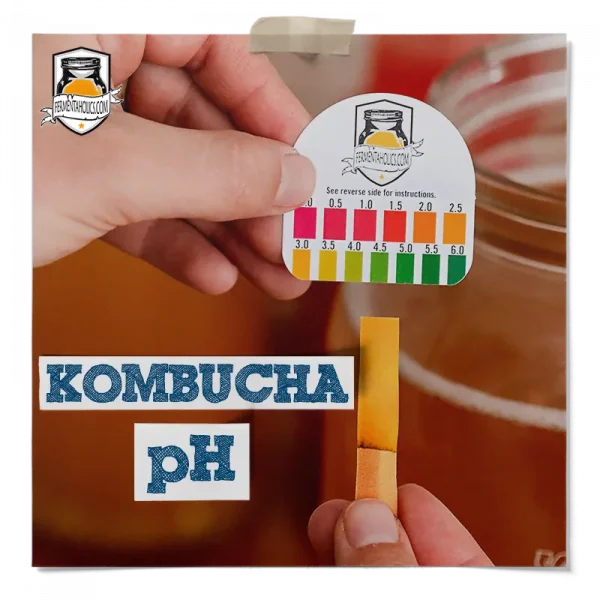
As for a “finished” pH, there isn’t one. Most store-bought kombucha lands somewhere around 3.0 to 3.2, and the typical home brew range is anywhere from 2.5 to 3.5. Where you end up depends on how long you ferment and what flavor profile you’re after. For the full breakdown on pH and why it matters, check out our complete guide to pH in kombucha.
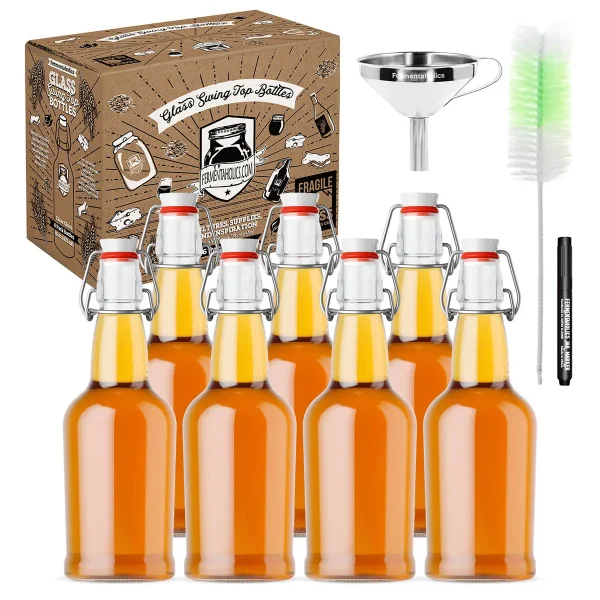
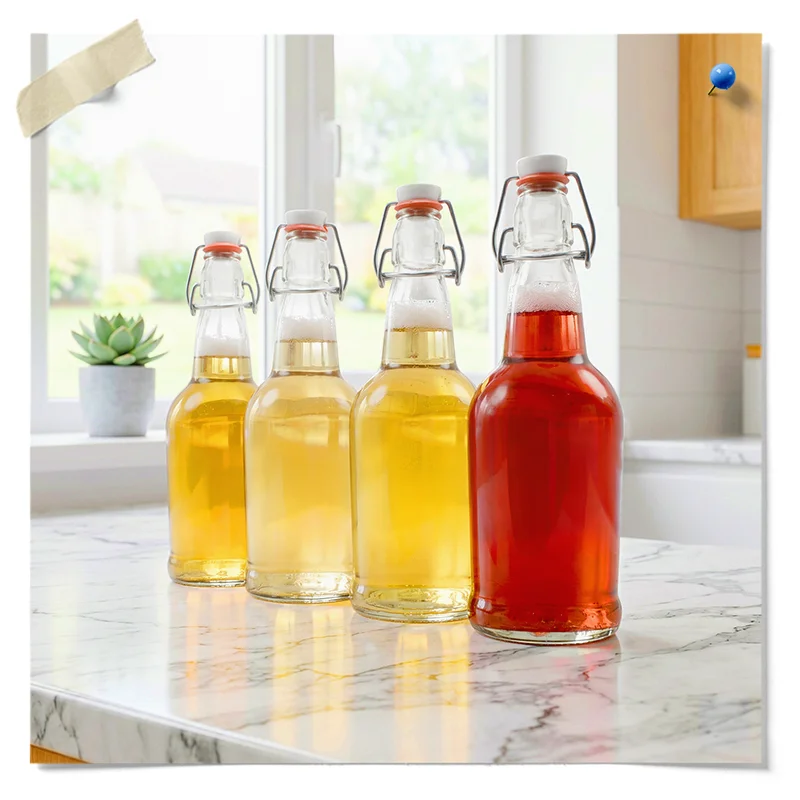
The second fermentation in kombucha is bottle conditioning, or simply F2. This is where carbonation happens. Once you bottle your finished kombucha with some fruit, syrup, juice, or sugar, you seal it up and let the yeast do their thing. They consume the added sugar, produce CO2, and since the bottle is sealed, that CO2 has nowhere to go; so it forces back into the liquid and carbonates it. F2 typically takes 2 to 10 days, and just like F1, temperature is the main driver.
You’ll want to keep your bottles somewhere between 75°F and 85°F during F2. Warmer temps mean faster carbonation. Cooler temps mean it’ll take longer. Below 70°F, fermentation slows way down and your timeline needs to stretch.
After 24 hours, burp one bottle to check how things are progressing. Crack the lid slightly, listen for a hiss, and watch for bubbles rising to the surface. What you see next tells you what to do:
Don’t burp every day. Every time you pop that cap, you’re releasing CO2 before it has a chance to build. Think of it like running the A/C with all the windows open. If there’s nothing happening on day one, just leave it alone and check again later. The goal is to all but eliminate burping; only do it as a precautionary measure.
For a full breakdown of bottling technique; bottle types, flavorings, ratios, and what to do when things go sideways, see our complete guide to bottling kombucha. And if you’re not getting carbonation at all, check out this post, why is my kombucha not fizzy?
Primary Fermentation (F1)
7 to 21 days
Temperature (speed) + taste preference (when you pull it)
Secondary Fermentation (F2)
2 to 10 days
Temperature + carbonation method + preference
Total
10 to 30 days
Most home brewers land somewhere in the 10 to 18 day range
Once you’ve done a few batches and know where your preferred flavor lands, the process will become more predictable. Most brewers get to a point where they’re running F1 continuously; always a batch fermenting while they’re drinking through their F2 bottles.
The most effective thing you can do is control your temperature. If your brewing spot runs cool, warming it to the 75°F to 85°F range hands down will make the most noticeable difference. A fermentation heat mat under the brewing vessel is an easy, low-cost way to hold a steady temperature without heating your whole house. Just keep an eye on it and aim to keep it under 85°F. An adhesive temperature strip stuck to the side of your jar makes monitoring effortless.
Beyond temperature, the other variable is just being aware of your preference in sweetness, and ignore all other noise found online that declares kombucha takes X amount of days; unfortunately it’s not that simple. A brewer who likes it sweeter will pull at an earlier, sweeter stage and will always have a shorter F1 than someone who prefers it tart. That’s not a problem to fix; it’s the process working as intended.
Taste it. Start at day 7. If it still tastes like sweet tea, it needs more time. If it’s got a pleasant tartness with a little sweetness still in there, you’re in a good spot. If it tastes sharp and vinegary all the way through, it’s gone a bit further than what you want. pH can help you confirm fermentation is progressing (a dropping number from day 1 to day 7 means it’s working), but there’s no magic pH number that tells you it’s done. That part’s up to you.
Yep. F2 is only necessary if you want carbonation. Still kombucha straight out of F1 is fully fermented and totally drinkable. Just bottle it, pop them in the fridge, and pour from there. No added sugar, no pressure buildup. See our post on how to make classic still kombucha for the full walkthrough.
It keeps acidifying and eventually will resemble a mild vinegar. It’s not spoiled or unsafe; it’s just sharply sour and past most people’s drinking preference. The good news: over-fermented kombucha works great as starter tea for your next batch, or you can use it like you’d use vinegar in cooking. If this keeps happening, pull it earlier. More on this in our post on why kombucha tastes like vinegar.
Not in any meaningful way, assuming you’ve used the proper 10% starter tea ratio (full breakdown in our kombucha ratios guide) for the volume you’re brewing. A 1-gallon and a 2-gallon batch at the same temperature will ferment at the same rate.
Check your temperature first. If your brew spot is below 75°F, that’s certainly it. If temperature looks fine, take a pH reading at day 7 and compare it to where you started. If the number hasn’t dropped at all, fermentation has stalled and you’ll need to start over. Our post on how to tell if your kombucha is fermenting walks through this in more detail.
If you’re carbonating, move straight into bottling. If you’re not sure what comes next, our post on my batch is ready, now what? covers all your options.