
How to Take pH Readings in Water Kefir
Why pH Matters — And How to Test It
Water Kefir pH
Understanding the process of water kefir fermentation and its progress can sometimes feel like a guessing game. You might find yourself wondering, “Is anything actually happening in my batch?” especially when visual cues are subtle or non-existent. The key to unveiling the facts lies in measuring the pH level of your water kefir—a straightforward, scientific method that offers a clear indication of fermentation activity.
Why Measuring pH in Water Kefir Matters?
During water kefir fermentation, a diverse community of microbes busily consumes sugar, producing alcohol, carbon dioxide, and organic acids. This micro-level activity transforms the sweet sugar water into the probiotic-rich drink we know as water kefir. However, since these processes occur on such a small scale, it’s impossible to observe them with the naked eye. This is where testing the ph of water kefir plays a crucial role.
How to Test Fermentation Progression in Water Kefir?

Importance of pH in Water Kefir
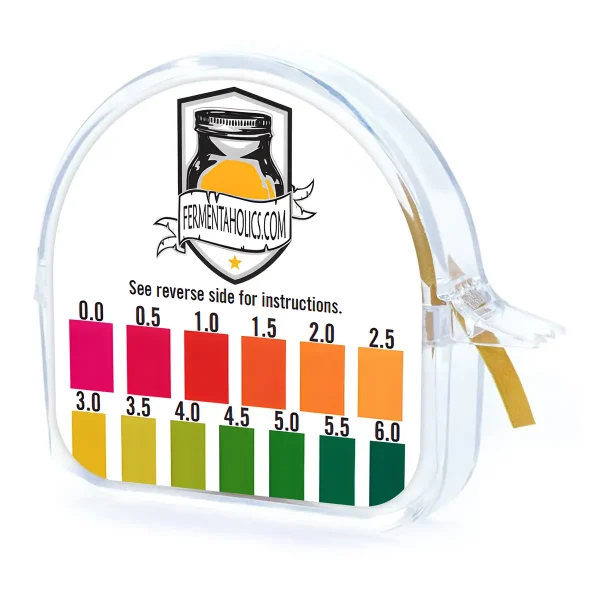
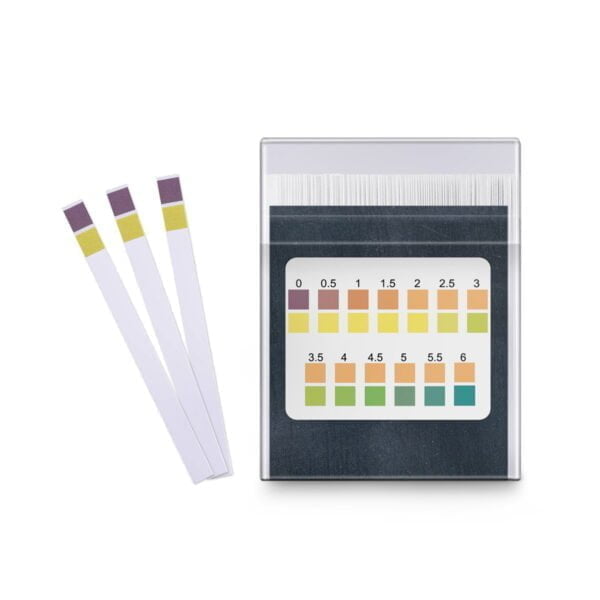
A pH test removes all the uncertainty associated with trying to assess microbes with the naked eye. A pH test provides a scientific, quantifiable measure of fermentation. The starting pH for water kefir fluctuates as the water source’s pH will fluctuate from household to household. Generally speaking, the starting pH will range between 5.0 and 6.0 and higher. From here, during fermentation, the environment within your water kefir gradually becomes more acidic, typically dropping to around 3.5 as the microbes do their work. This does not mean that water kefir is ready once it reaches 3.5; it just means that it will continue to fall in time, but it’s up to you when you stop fermentation. The key here is a falling pH. So, as it ferments, acids increase, making it more acidic, which in turn lowers the pH value or number. Thus, a falling pH tells us that fermentation is occurring regardless of what we see. So, a decreasing pH value is a reliable indicator that fermentation is progressing as it should, offering peace of mind and a way to track the brew’s development beyond the often-used visual speculation.