
Is Kombucha Paleo?
With the rising popularity of kombucha, more and more people with specific dietary needs are wondering if kombucha fits into their diet.
With the rising popularity of kombucha, more and more people with specific dietary needs are wondering if kombucha fits into their diet.
With the multitude of articles about the health and wellness benefits of kombucha circulating the internet and social media, it’s difficult not to know a positive thing or two about this ancient fermented tea. But with increased exposure and popularity, more and more people with specific diets and active lifestyles are wondering: is this drink right for me? And this brings us to an interesting topic: is kombucha paleo approved?
“Paleo” is short for “Paleolithic,” which refers to the Paleolithic era (from about 3 million years ago to about 10,000 years ago). Colloquially we’re talking about “the caveman era.” In the context of modern fitness and diet plans, “paleo” refers to a diet that includes only foods that were believed to be available to humans in the caveman era. This means consuming naturally occurring foods like fruits, vegetables, meat, nuts, and seeds. It means excluding certain foods that came about when humanity started farming and producing food like grains, legumes, dairy products, and, most importantly, sugar.
The idea behind this diet is that our bodies are biologically optimized for a particular diet, and a return to that diet is not only beneficial from a health and wellness standpoint but can also help keep weight in moderation and certain health issues at bay. With many links found between sugar and maladies like diabetes and obesity, it’s understandably at the forefront of many people’s minds, especially those who are health-conscious and might be following the paleo diet.
It’s essential to know how kombucha is made to understand why kombucha being acceptable on the paleo diet is even up for debate.
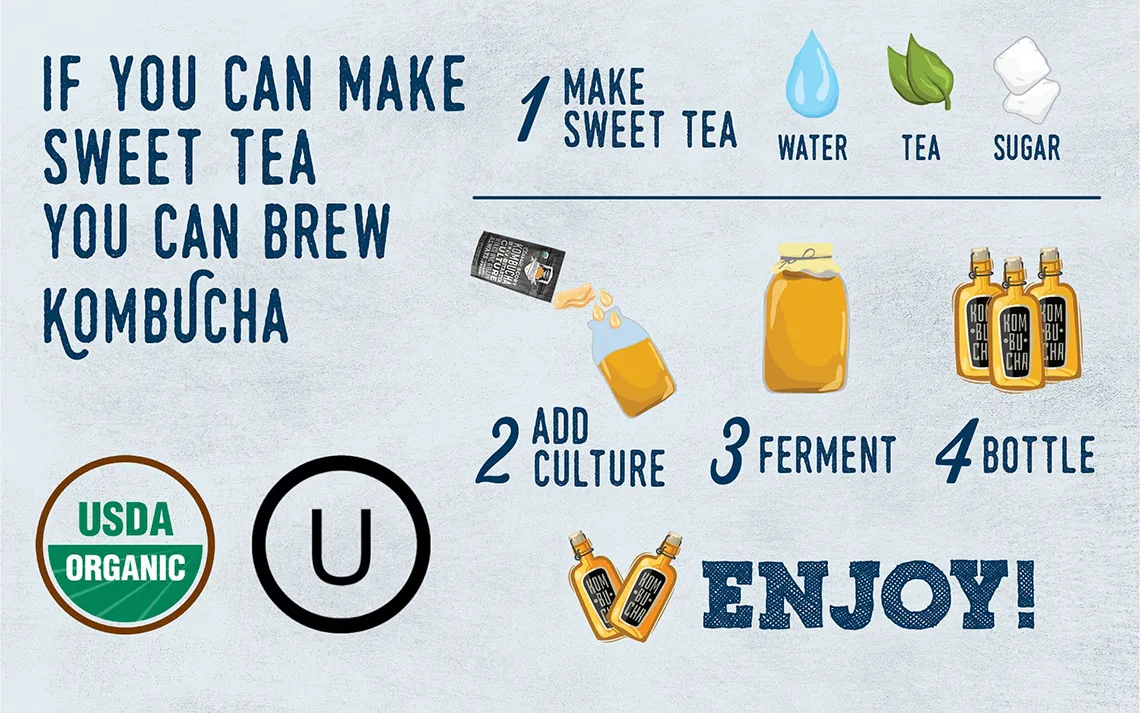
Kombucha is a fermented tea, so of course, two ingredients are water and tea. No problems there! To brew kombucha, you also need a SCOBY, the bacteria and yeast that carries out the fermentation. Still in the clear!
However, the “fermenting” part is what brings up this question. Fermentation (at least in the context of brewing kombucha and other alcoholic drinks) is the conversion of sugar to alcohol using yeast. Along with tea and water, brewing kombucha requires sugar, and since sugar is a big no-no for the paleo diet, it’s now clear why kombucha being paleo-approved may come into question.
Well, it depends on who you ask as it isn’t so black and white. If we’re going by very strict definitions, kombucha does not belong on a paleo diet.
But there’s still good news for kombucha lovers who abide by paleo diet restrictions: the vast majority of the sugar used to make kombucha is eaten up by the SCOBY (that culture of bacteria and yeast we mentioned earlier). The SCOBY feeds on the sugars and produces beneficial acids and small amounts of alcohol (usually less than 0.5% ABV). The result is a slightly sweet, tart, delicious, carbonated drink with very low sugar content.
Although it does depend on who you ask, experts on the paleo diet have confirmed that they consider kombucha paleo-friendly, especially given the very low sugar content and the health benefits. Anyone following the paleo diet can rest assured that kombucha is healthy and is generally considered approved for paleo, even by the experts!
It also should be noted that if you want to be strict with your paleo diet but still love kombucha; homebrewing kombucha gives you more control over how much sugar is consumed by the yeast and bacteria. The longer the kombucha brew is left to ferment, the more sugar will be “used up” and converted by the kombucha culture. So if you’re a strict paleo dieter, brewing kombucha at home might be best for you! Find out how to brew kombucha at home here.
Yes, kombucha is considered Paleo as it aligns with the dietary restrictions and guidelines of the Paleo diet, given that it is a natural, fermented drink made from tea and sugar.
Sugar is a vital ingredient in kombucha’s brewing process. It is not added for sweetness but to feed the SCOBY (Symbiotic Colony Of Bacteria and Yeast), which converts the sugar into alcohol and beneficial acid, making the final product low in sugar. See the role of sugar in kombucha for details.
Yes, the fermentation process of kombucha significantly reduces its sugar content. The SCOBY consumes most of the sugar during fermentation, making the finished product much less sugary than the initial brew. Learn more about fermentation time and sugar content.
Some commercial kombuchas may not be considered Paleo due to the addition of non-Paleo ingredients which are not in line with the Paleo diet’s principles.
Yes, homemade kombucha is generally more likely to be Paleo-friendly than many store-bought versions, as you can control the ingredients and avoid non-Paleo additives.
The Paleo diet emphasizes gut health because it recognizes the vital role of the digestive system in overall health. It encourages consumption of foods that are high in probiotics and low in processed ingredients, like kombucha, to maintain a healthy balance of gut bacteria.
The sugar content in a final kombucha brew is influenced by the amount of sugar added at the start and the length of the fermentation process. Longer fermentation times lead to lower sugar content as more sugar is consumed and converted during fermentation.
Yes, you can flavor kombucha to better align with personal tastes while remaining Paleo-friendly. This can be done by adding natural, Paleo-approved ingredients like fresh fruit, spices, or herbs during a second fermentation stage.
To ensure your homemade kombucha remains Paleo-friendly, use organic tea and sugar, ensure the SCOBY consumes most of the sugar during fermentation, and if adding flavors, only use natural, Paleo-approved ingredients. Avoiding artificial additives and sweeteners will help keep the kombucha within Paleo guidelines.