
$2.50
In stock


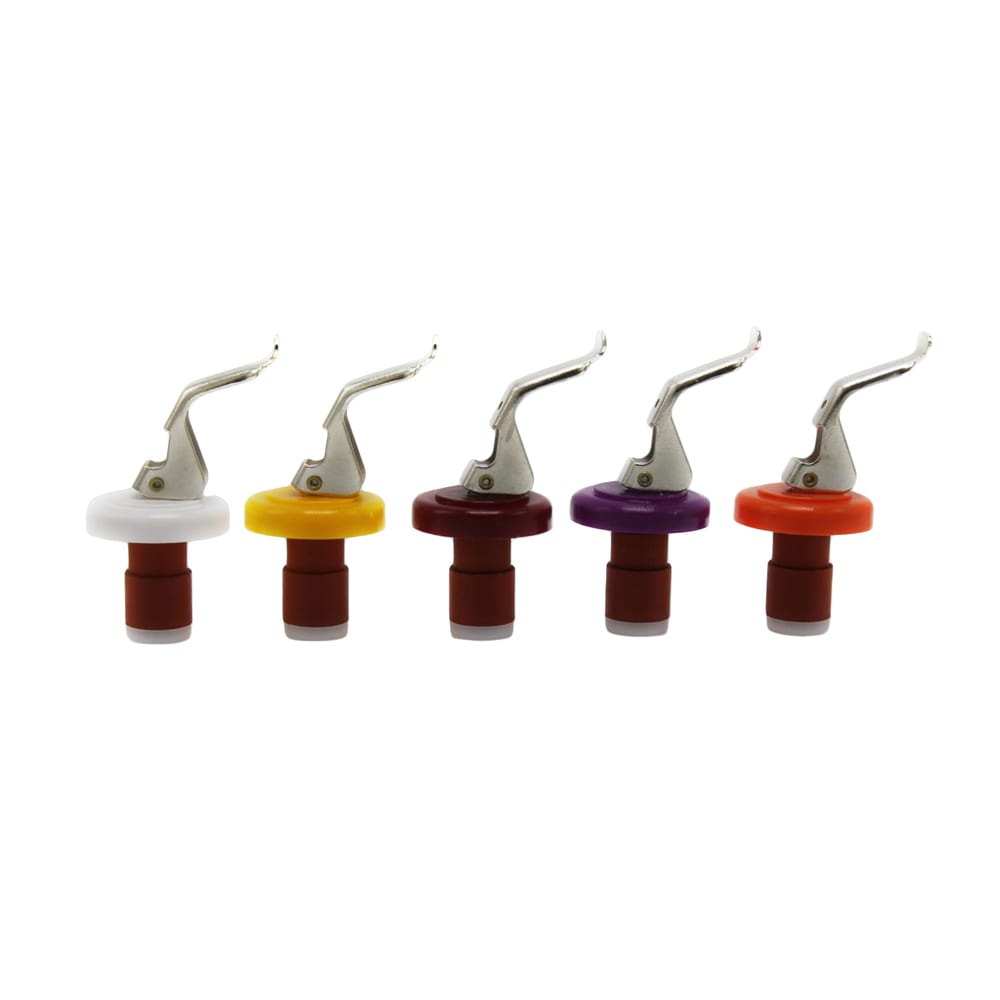
Measure the inside diameter of your bottle opening, not the outside of the glass. This stopper measures 14 mm across when the lever sits up, and it expands to 20 mm when you press the lever down. Anything with an opening between 15 mm and 20 mm will seal.
A standard wine bottle has an 18 mm opening, so it fits with room to spare on both sides of the range. If your opening measures under 15 mm, the stopper bottoms out before the rubber makes contact and it won’t hold. If your opening runs over 20 mm, the rubber can’t expand far enough to grip the glass.
The stopper has a rigid plastic core with a rubber sleeve around it. When you push the lever down, the core pulls up and squeezes the rubber sleeve from top and bottom. Squeezed rubber has to go somewhere, so it pushes outward against the inside of the bottle neck. That outward pressure is what creates the seal and holds the stopper in place.
Lift the lever and the sleeve relaxes back to 14 mm, and the stopper slides right out.
This seals by friction, not by locking down like a swing top or a threaded cap. That matters for one specific use.
Don’t use this to carbonate kombucha, beer, or water kefir in secondary fermentation. Active fermentation builds real pressure inside a sealed bottle, and that pressure works against the only thing holding this stopper in: friction. You’ll either lose your carbonation slowly as CO2 escapes past the rubber, or you’ll find the stopper on the floor. For building carbonation, use swing-top bottles or stout bottles with polyseal caps, both of which have lids designed to hold pressure.
Use this stopper for what it’s built for: closing a bottle you’ve already opened.