Author:
Fermentaholics
Published:
07/31/21
Last Modified:
09/22/26
Burrata Cheese Recipe

Burrata Cheese Recipe

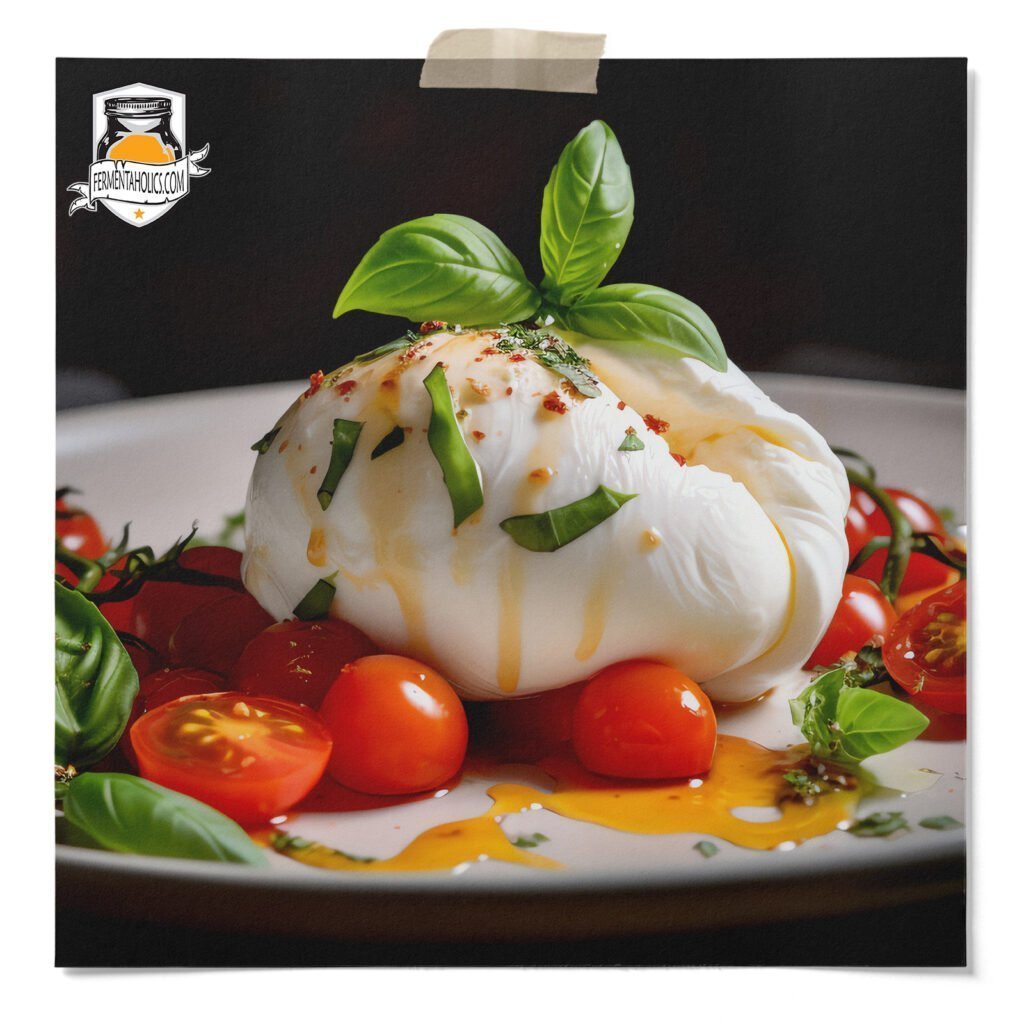
Perfection in a pouch.

A Beginner's Guide on How to Make Burrata Cheese

Cut into a burrata and the creamy center comes spilling out, which is the whole point. It looks like a chef’s trick, but it’s really just mozzarella with a surprise inside, and you can pull it off at home in about 30 minutes. If you’ve made our 30-minute mozzarella, you’re already halfway there.

How to Make Burrata Cheese

Burrata is perfection in a pouch, a shell of mozzarella oozing with creamy, salty curds. It makes a fancy appetizer served with a toasted baguette, tomatoes, basil, and balsamic vinegar, or switch it up and serve it with prosciutto and cantaloupe.

Cheese was discovered by accident: ancient farmers left milk in the sun, drained off the liquid, and found the leftover curds tasted surprisingly good.

How To Make Burrata Cheese

How to Make Cheese

The cheesemaking process uses heat, acid, and enzymes to break apart the different components in milk and manipulate them into the cheesy deliciousness that we know and love. Every cheese you’ve ever met starts with the same basic ingredients: Milk + Acid + Heat + Enzymes + Salt. Some cheeses stop right there, like mozzarella, which we call fresh cheese. Jumping into more complex flavors and textures, like soft-aged and hard cheeses, requires manipulation of temperature, moisture content & fermentation.

The first step of all cheesemaking is breaking the milk into curds and whey. This “breaking” is a chemical process. While milk proteins typically repel one another, when the pH is lowered, an enzyme is added, or the temperature is raised, the proteins suddenly begin to attract one another and clump together in what we see as curds. The liquid that the proteins leave behind is whey. To learn more about these cheese basics, check out our Easin’ Into Cheesin’ Fresh Cheese Making Kit. Now, let’s start our thirty-minute timer and get to making some burrata cheese!

Burrata Cheese Ingredients

  • 1 Gallon Whole Milk (Not Ultra-Pasteurized) – Fresh whole milk gives the best results. Pasteurized is fine, but ultra-pasteurized milk won’t form a curd.
  • ½ Cup Heavy Cream – Makes the filling rich and buttery.
  • ¼ Tablet Rennet, Dissolved In ¼ Cup Water – Sets the milk into curds.
  • 1 ½ Teaspoons Citric Acid, Dissolved In ½ Cup Water – Without citric acid, the cheese will turn out lumpy and hard to stretch.
  • 1 Teaspoon Cheese Salt – Seasons the cheese. It’s made in flakes so it dissolves easily into the curd.

Skip the calcium chloride for this recipe. Extra calcium can keep the curd from stretching.

You can find all of the ingredients and resources you need in our Fresh Cheese Making Kit!

Burrata Cheese Recipe

Recipe by Fermentaholics
0.0 from 0 votes
Course: Burrata Cheese, Cheese Recipe, CheeseCuisine: CheeseDifficulty: Easy
Servings

1 - 1.25

Pounds
Prep Time

30

minutes
Cooling Time

5

minutes

This recipe makes 2 burrata, around 1–1.25 pounds total. For a larger batch, multiply the ingredients or use the serving size toggle above.

Ingredients & Supplies

  • Ingredients
  • 1 Gallon Whole Milk (Not Ultra-Pasteurized)

  • 1/2 Cup Heavy Cream

  • 1/4 Tablet Rennet, Dissolved In ¼ Cup Water

  • 1 1/2 TSP Citric Acid, Dissolved In ½ Cup Water

  • 1 TSP Cheese Salt

  • Supplies
  • 5 Quart Pot or Larger, Heavy Bottomed (Stainless Steel or Enameled, Not Aluminum)

  • Thermometer

  • Large Slotted Spoon

  • Medium Microwave Safe Bowl

  • Small Bowl (For the Filling)

  • Large Bowl For Water Bath

  • Gloves

  • Measuring Tools: 1 Cup, ½ Cup, ¼ Cup, 1 TSP, ½ TSP

Directions

  • Add milk and citric acid solution to a pot and begin heating over medium heat.
  • Once milk has reached 90°F, add diluted rennet and stir thoroughly for 30 seconds.
  • You’ll notice a thick curd beginning to form. Continue heating, stirring gently, until it reaches 105°F. Remove from heat and let sit for 5 minutes.
  • Prepare a water bath: fill a large bowl with room temperature water. Set aside.
  • Scoop curds out into the microwave safe bowl and drain off excess whey.
  • Prepare filling: remove 1 cup of the curds and place into a small bowl. Mix in heavy cream plus a pinch of salt. Set aside.
  • Prepare mozzarella shells:
    7.1. Heat and Knead Curds: microwave the remaining curds on high for 90 seconds. Wearing gloves, knead the curd in the bowl about 10 times to help distribute the heat.
    7.2. Drain off any whey and sprinkle with the rest of the salt. Microwave for another 30 seconds, then knead again about 10 times.
    7.3. Repeat this process until the curd begins to come together and you’re able to stretch it apart without it breaking (it needs to hit at least 135°F). Stretch a few more times until it’s shiny.
    7.4. Shape into a ball and cut in half to make 2 shells. Don’t put them in the water bath yet.
  • Working with one shell at a time (or else they will cool too quickly), shape into a ball. Use your finger to poke a hole almost all the way through the ball, creating a void. Then, carefully stretch it into a thin, balloon-like pouch.
  • Take half of the cream mixture and pour it into the pouch. Knead, twist, or tie the pouch closed. Place in the water bath for about 5 minutes so it cools and stops stretching.
  • Reheat the second half for 30 seconds so it’s easier to shape, then repeat steps 8 and 9.

Tips

  • High-quality milk yields high-quality cheese! You can use cow, sheep, goat or buffalo milk. Each type has different ratios of fat and protein and lends its own flavor. Purchase the least processed, most local whole milk you can find. Pasteurized whole milk works fine, raw or non-homogenized milk gives the most flavor, and ultra-pasteurized milk won’t coagulate at all.
  • No microwave? Heat the whey to 185°F and hold it there. Drop in the curds for a minute, press them together against the side of the pot, then knead in a bowl. Dip and knead until it stretches and turns shiny.
  • Save the whey: use it as the liquid in soups, biscuits, pizza dough, or smoothies, or add it to fermented veggies or sourdough starter for a boost.
  • Burrata is best eaten the day it’s made. Refrigerate leftovers covered and eat within 1–2 days.
Similar Post.

Just for You

Easy Beginner Ferments

0
0
Your Cart
Your cart is emptyReturn to Shop

Shop by Batch Type